🍷 Save up to 25%! Choose 60 bottles (even all different), stock up, share… and toast with friends. [Discover the proposal →]
Can't find what you're looking for? Try Advanced Search!

Presentazione gastronomy

Prodotti collegati a gastronomy

Post inerenti gastronomy

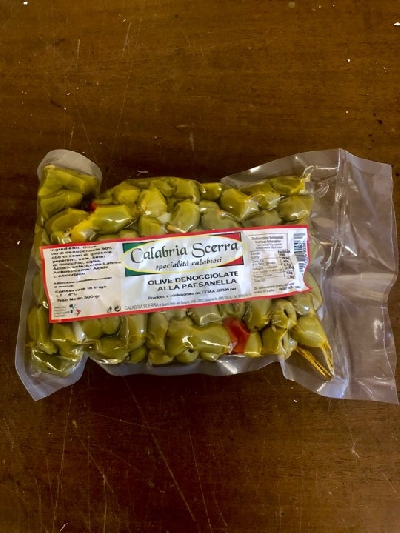
The olive trees, besides being an authentic natural show for the eyes, give us one of the fruits that can’t miss when we talk about the fundamentals of Italian gastronomy. Olives are indeed cultivated and produced in many different area of the nation, at different climatic, geological and technical conditions, since then it derives a strong differentiation between the different producers, both concerning the area and the specie. And Calabria Scerra knows that well, a company that, due to its origin, could not but give a certain amount of space among its specialties. Indeed, Calabria, is a region plenty of olives, thanks to a unique variety of species that overcomes the 15 different kinds, so it is centuries that many different specialized producers have been realizing Calabria olives of any type: natural, seasoned, brine, Pitted olives at Paesanella - Calabria Scerra and so on.
Fotografia caricata da OIP
With OIP the specialities of the Italian gastronomy don’t know borders! We’re ready to bring the authentic products and tastes from all the nation to the tables of all the six continents. Hand made pasta, wines, cold cuts, cheeses, sauces, fresh products and many others, it will be enough to order whatever you desire, and we will take care of the rest.
Fotografia caricata da OIP
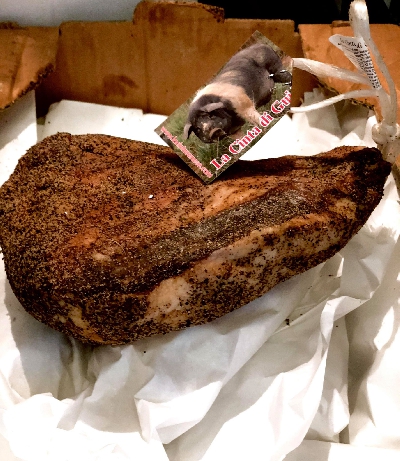
As a work of art that strikes particularly, this time is the Guanciale (jowl bacon) - La Cinta di Guido to leave us astound. A harsh comparison someone should say, but if you think about it deeply the gastronomy world and art have in common more than you would ever imagine. Both of them have the power to evoke sensation, move, and at the same time so succeed in this task skills, study, knowledge and why not a certain natural predisposition are needed, Someone may not agree, but we believe that food is a means through which transmitting messages and feelings, and isn’t this the aim of art itself?
Fotografia caricata da OIP
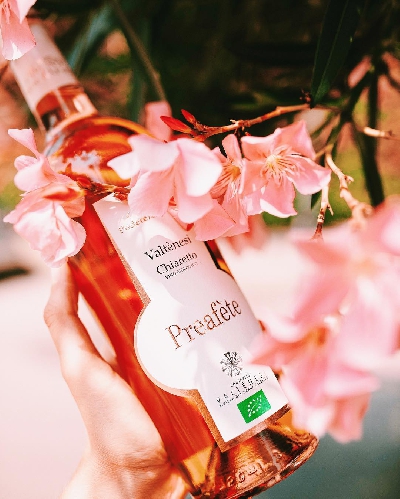
The typical Eno-gastronomy is a relevant part in the knowledge of a territory, and it reveals more than you would ever think about it. As a consequence, to discover deeply the perfumes and tastes of a city, province, area or region which means is better than wine? A concrete example of this bond is the Valtènesi Chiaretto DOP, typical wine exclusive of the western side of the lake, a section with unique conditions. Valtènesi Chiaretto D.O.P. “Preaféte” BIO organic - Podere dei Folli has in its intense rosé with ruby shades characteristic color the dynamism of an area that within few kilometers can totally change its cultural and environmental scenario. The floral perfumes are the ones that you can feel during spring of which this zone is plenty of, particularly the lotus flower typical of the Sovenigo lakes area in Valtenesi, where the wine cellar Podere dei Folli has its vineyards. A wine that must be drunk young, with a great acidity, fruity tastes with sapid and mineral notes in the end.
Fotografia caricata da OIP
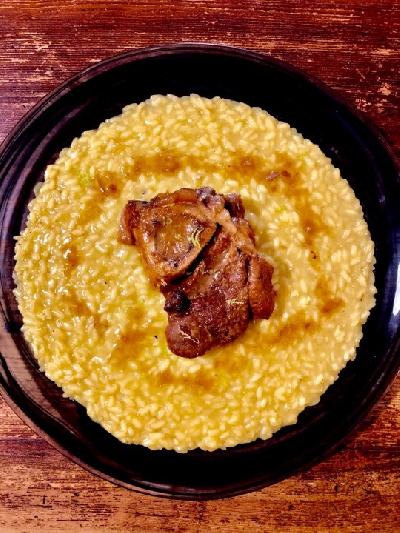
Some classics of the gastronomy are doomed to remain in the cooking history, leaving an indelible mark. They may certainly be reinterpreted, or presented in different versions, but the real secret are the tastes they’re made up of. We can insert in this field the risotto alla milanese with ossobuco, a recipe symbol of the Lombardy region capital whose flavors are shaped in a perfect harmony of which we’re giving you our version: starting from a goof meat broth that exalts the delicacy of Acquerello - Carnaroli Rice and saffron (Saffron pistils Principato di Lucedio), the full and enveloping taste of the ossobuco and the marrow, cooked with some thinly chopped anchovy fillets that add sapidity, contrasted by the Sicilian lemons from Ribera zest (true secret touch of this recipe, for our palate). Finally creamed with some icy Butter - Beppino Occelli and Parmigiano Reggiano Vacche Rosse (milk from the red cow) 30 months.
Fotografia caricata da OIP
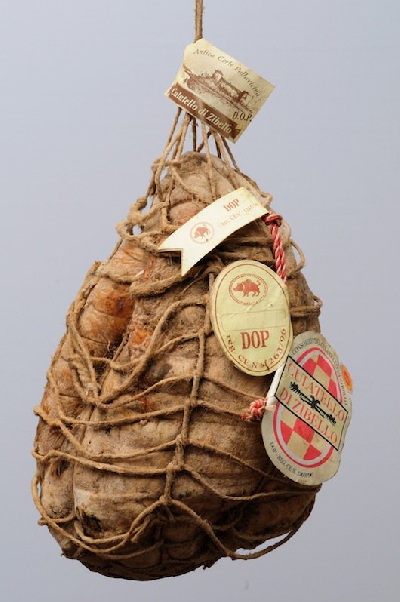
Culatello Spigaroli by Antica Corte Pallavicina is something that anybody wish to have on his table during their Christmas lunch. Becoming a Slow Food praesidium, this Culatello di Zibello DOP is renowned in the gastronomy world due to the unicity of the production method and the particular microclimate of the Parma area, that make it an unique product throughout the world. The raw materials are carefully selected, obtained from the Parma black pig ancient race, hand processed and finally let aging in the ancient cellars dating back to 1320, location thanks whom the CULATELLO DI ZIBELLO DOP ORO SPIGAROLI - SLOW FOOD- GOLD and CULATELLO DI ZIBELLO DOP PLATINO SPIGAROLI- PLATINUM 36 Months acquire the characteristics that make it the best Italian cold cut according to the experts.
Fotografia caricata da OIP
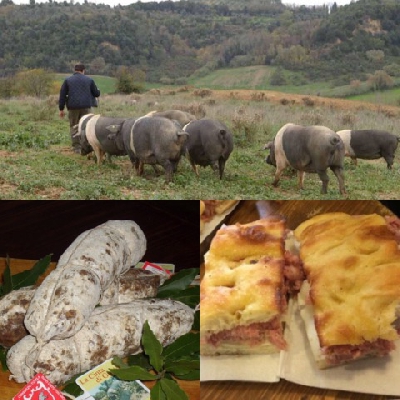
When you think about the delicacies of the Tuscan tradition, the link with finocchiona comes up spontaneous to your mind. This particular cold cut has ancient roots, that dates back to the Middle Age. Due to the black pepper high cost, the pork butchers tried to add to the dough what the surrounding territory offered them, and the fennel seeds were abundant in every Tuscan hill. The result was really exceptional, so good that the finocchiona has become one of the main symbols of the Tuscan gastronomy. La Finocchiona (fennel salami) - La Cinta di Guido is made using exclusively cinta senese pork meats, that is to say a local race hybrid between pork and boar free range bred. Differently from the common pork, its meat are easier to digest due to the presence of omega 3 acid fats (associated to a decreasing of the fats in the blood), omega 6 (action against thrombosis) and oleic acid ( helps preventing cholesterol). So the final products are endowed with a more pleasant lard and an unique aromaticity. La Cinta di Guido has joined the P.D.O consortium, that allows the complete traceability of the final product.
Fotografia caricata da OIP
When you think about the delicacies of the Tuscan tradition, the link with finocchiona comes up spontaneous to your mind. This particular cold cut has ancient roots, that dates back to the Middle Age. Due to the black pepper high cost, the pork butchers tried to add to the dough what the surrounding territory offered them, and the fennel seeds were abundant in every Tuscan hill. The result was really exceptional, so good that the finocchiona has become one of the main symbols of the Tuscan gastronomy. La Finocchiona di Cinta Senese - La Cinta di Guido is made using exclusively cinta senese pork meats, that is to say a local race hybrid between pork and boar free range bred. Differently from the common pork, its meat are easier to digest due to the presence of omega 3 acid fats (associated to a decreasing of the fats in the blood), omega 6 (action against thrombosis) and oleic acid ( helps preventing cholesterol). So the final products are endowed with a more pleasant lard and an unique aromaticity. La Cinta di Guido has joined the P.D.O consortium, that allows the complete traceability of the final product.
Fotografia caricata da OIP
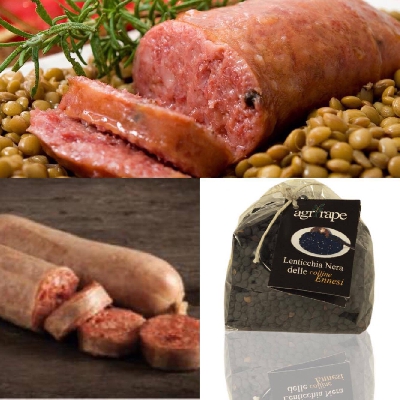
As we've just told you about our Christmas products and special Christmas boxes, so we're giving you one of the most famous and typical Italian Christmas recipes: the cotechino with lentils. In this case we're using the Musetto - Salumificio Lovison, which is a very special kind of cotechino famous among all the Italian gastronomy passionates and chefs. Many things makes this product different from the average cotechino, from the meat which come from 100% Friulian porks bred without GMO animal feeds , to the part of the pork used (cheeks, throat, shin and rind) and the secret mixture of spices which make it both tasty and delicate. Ingredients: Musetto - Salumificio Lovison, Black lentils Sicily - Azienda Agricola Agrirape, onion, carrot, celery, vegetable broth, Organic extra virgin olive oil - Adamo, bay leaf, salt, pepper. First, starting from cold water, make the musetto boiling for 3 hours. Meanwhile chop the onion, carrot and celery, put them in a wide frying pan with some evo oil and make them stir fry adding the lentils, covering all with vegetable broth and make it cook for 1 hour and a half adding a bay leaf. When the lentils will be ready season with salt and pepper, cut the musetto into slices and put them in the pan with the lentils.

Fotografia caricata da OIP
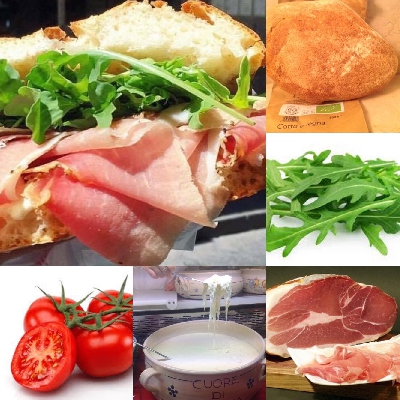
Sandwiches are one of the most ancient dishes of the human culinary history. They've been making all around the world for thousand years in infinite variants, one of the most ancient has its origin in Italy as it was made by the Romans. The historians say that the Romans were so fond of "Panis ac perna" (sandwich with prosciutto crudo) that there was plenty of open air cold cuts markets and a street too called "Panisperna" was dedicated to that delicious food. As nowadays sandwiches have become a true art representing a country gastronomy heritage, today we want to honor the historical tradition giving you an ancient recipe with a touch of new representing the past and present of the Italian gastronomy. The sandwich we're giving you is simple, fresh and tasty, what makes it exceptional is the choice of only genuine and high quality Italian products. - Stonebaked organic Pugliese type bread - Forno Astori: made with natural dough beginning with a natural starter and 100% Italian certified biologic flour without any additive and cooked a wooden oven. - Prosciutto San Daniele DOP (raw ham) on piece - Il Camarin: a top quality Raw Ham thanks both to the section of excellent meats and the processing which is mostly hand made. - Apulian Stracciatella - Caseificio Voglia di Latte: a typical Apulian cheese with donates an unique taste to your sandwich, impossible not to fell in love with it, it has to be as fresh as possible. - Pachino Cherry Tomatoes: cultivated in a Sicilian area famous for the quality of the tomatoes that grow on its ground, they have a sweet and pleasant taste. - A final touch of arugula to balance with a bitter shade.
Fotografia caricata da OIP
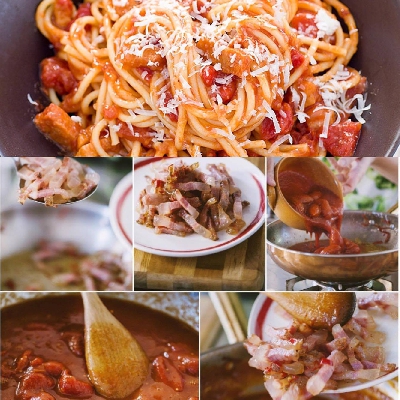
Today we want to describe you one of the symbol, maybe the symbol, of the Roman gastronomy: the Pasta all'Amatriciana. The Pasta alla'Amatriciana is a direct descendant of the pasta alla gricia, which is a dish of spaghetti seasoned with EVO oil, clack pepper, Roman Pecorino and guanciale, born in a village called Grisciano. The adding of tomato to the recipe is attributed to a Roman chef called Franceso Leonardi who cooked the first Amatriciana at the end of the XVII century at the court of the Pope, serving during an important institutional banquet a popular dish in perfect Roman style. The amatriciana, as many other pasta recipes, hasn't a strict and well defined disciplinary, there are different adding even depending on which ingredients you have at home, many variants which anyway maintain 3 fundamental ingredients as base: guanciale, tomato and Roman pecorino. Here you are our recipe Ingredients: 400 g of bucatini, 200 g of guanciale, 300 g of tomato sauce, 75 g of grated Roman pecorino, red chili pepper. Put the basta in boiled salted water looking at the cooking time on the pasta box and mixing it in order not to make it attach to the pot. Meanwhile brown the guanciale cut into small cubes (not too small) in a pan until it will be crispy. Then add the tomato sauce and the sliced red chili pepper and make it cook at low flame until the sauce get the right consistency. When the bucatini will be al dente drain them and amalgamate with the sauce stir frying them together adding the roman pecorino, serve them well hot.
Fotografia caricata da OIP

News riguardanti gastronomy

Domande su gastronomy