 Austria
 Belgium
 Czech Republic
 Denmark
 English (world)
 Finland
 France
 Germany
 Italy
Italy Netherlands
 Poland
 Portugal
 Spain
Spain Sweden
 USA
USA


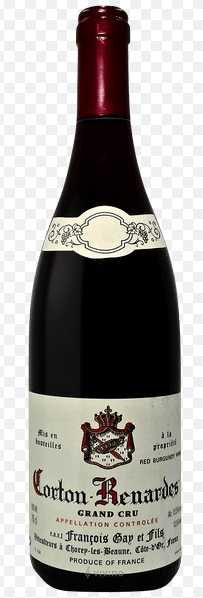
Manufacturer: Domaine François GAY
One of France's most legendary grapes and the grape that earned Burgundy its reputation. The parent of varietals like Pinot Gris/Grigio and Pinot Blanc, Pinot Noir is blue to violet to indigo in color with relatively thin skins, and it is said to have been cultivated in France for more than 2,000 years. At its best, Pinot Noir creates elegant wines that are filled with primary red fruit aromas and flavors while young, revealing with an array of secondary characteristics like earth, smoke, violet, truffle and game with age. The varietal is also known, perhaps better than any, for its ability to translate terroir, or a sense of place. While the best Pinot Noir still comes from Burgundy, it is being produced with increasing success in cooler climates around the world. In France, it is part of the trifecta of grapes that can go into Champagne, and it is also grown in Alsace, Irancy, Jura, Savoie, Lorraine and Sancerre. Outside of France it is produced under the names Pinot Nero and Blauburgunder in Italy's mountainous regions, as Spätburgunder in Germany and as Blauburgunder in Austria. In the US, Pinot Noir has found suitable growing conditions in the cooler parts of California, including Carneros, the Russian River Valley, the Anderson Valley, the Sonoma Coast, Monterey County, the Santa Lucia Highlands and Santa Barbara County, as well as in Oregon's Willamette Valley. In recent years, New Zealand has demonstrated its ability to interpret this hard-to-grow varietal, with successful bottlings coming from careful and attentive growers in Central Otago, Martinborough and Canterbury. Chile is also an up-and-coming region for Pinot Noir, creating fresh, fruit-forward, early-drinking and affordable Pinots from the coastal Casablanca Valley and the Limari Valley.
The hill of Corton, an escarpment topped with a forest, overlooks the Grand Cru vineyard of Corton and the towns of Ladoix-Serrigny and Aloxe-Corton in the Côte de Beaune. This is the first area south from the town of Beaune. Corton is the sole Grand Cru red of the Côte de Beaune. The southeast portion of this vineyard produces Grand Cru white, and is called Corton Charlemagne. Famous Premier Cru vineyards are Corton Bressandes, Corton Renardes and Corton Clos du Roi.
One of France's most legendary grapes and the grape that earned Burgundy its reputation. The parent of varietals like Pinot Gris/Grigio and Pinot Blanc, Pinot Noir is blue to violet to indigo in color with relatively thin skins, and it is said to have been cultivated in France for more than 2,000 years. At its best, Pinot Noir creates elegant wines that are filled with primary red fruit aromas and flavors while young, revealing with an array of secondary characteristics like earth, smoke, violet, truffle and game with age. The varietal is also known, perhaps better than any, for its ability to translate terroir, or a sense of place. While the best Pinot Noir still comes from Burgundy, it is being produced with increasing success in cooler climates around the world. In France, it is part of the trifecta of grapes that can go into Champagne, and it is also grown in Alsace, Irancy, Jura, Savoie, Lorraine and Sancerre. Outside of France it is produced under the names Pinot Nero and Blauburgunder in Italy's mountainous regions, as Spätburgunder in Germany and as Blauburgunder in Austria. In the US, Pinot Noir has found suitable growing conditions in the cooler parts of California, including Carneros, the Russian River Valley, the Anderson Valley, the Sonoma Coast, Monterey County, the Santa Lucia Highlands and Santa Barbara County, as well as in Oregon's Willamette Valley. In recent years, New Zealand has demonstrated its ability to interpret this hard-to-grow varietal, with successful bottlings coming from careful and attentive growers in Central Otago, Martinborough and Canterbury. Chile is also an up-and-coming region for Pinot Noir, creating fresh, fruit-forward, early-drinking and affordable Pinots from the coastal Casablanca Valley and the Limari Valley.
The hill of Corton, an escarpment topped with a forest, overlooks the Grand Cru vineyard of Corton and the towns of Ladoix-Serrigny and Aloxe-Corton in the Côte de Beaune. This is the first area south from the town of Beaune. Corton is the sole Grand Cru red of the Côte de Beaune. The southeast portion of this vineyard produces Grand Cru white, and is called Corton Charlemagne. Famous Premier Cru vineyards are Corton Bressandes, Corton Renardes and Corton Clos du Roi.
| Do you have questions about our products? Publish here your question and our team will answer you as soon as possible. |