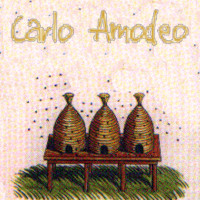
Palermo, it is the beginning of the 2000s when Carlo Amodeo begins the recovery of the Sicilian Black Bee. He became the only remaining beekeeper of this species now doomed to extinction. An almost heroic project that years later can be said to have been realised, the Sicilian Black Bee is now safe and its honey is a slow food presidium of the highest quality. Discover through the different types (millefiori, sulla, cardoon, orange, etc.) and origins (Lampedusa, Vulcano, Monti Madonie) the facets of the Sicilian territory thanks to the symbiosis with this local species of bee. The Sicilian honey bee risked total extinction in those years, which was avoided thanks to the studies and research of a Sicilian entomologist, Pietro Genduso, who passed on this passion to a student, Carlo Amodeo, among the few breeders of Sicilian queen bees registered in the national registry.
The last bugni of Sicilian black bees were found in a baglio in Carini, and they contained a few families of bees that Carlo Amodeo kept on the islands of Vulcano and Filicudi.
The Sicilian Black Bee It is very docile, so much so that no masks are needed in honey extraction operations, is very productive-even at high temperatures, and tolerates temperature changes well.
Very important characteristics for production in areas with a very hot climate. The black Sicilian also develops brood early, between December and January, thus avoiding winter brood stalling.
The farm has three laboratories: one is for storing the honeycombs that have just arrived full of honey from the flowering areas, honey extraction operations and packaging of the products, another is a warehouse where we store hives and boxes and the third with a roof covered with solar panels that are used to produce the necessary energy .
The company is located in the countryside, on the slopes of the San Calogero Park, while the apiaries are located throughout Sicily, having oriented the production of honey mainly towards monofloral honeys it is necessary to find extensions of flowers of the same species.
 Austria
 Belgium
 Czech Republic
 Denmark
 English (world)
 Finland
 France
 Germany
 Italy
Italy Netherlands
 Poland
 Portugal
 Spain
Spain Sweden
 USA
USA