 Austria
 Belgium
 Czech Republic
 Denmark
 English (world)
 Finland
 France
 Germany
 Italy
Italy Netherlands
 Poland
 Portugal
 Spain
Spain Sweden
 USA
USA


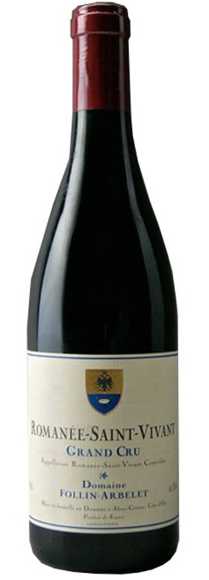
Manufacturer: Domaine FOLLIN-ARBELET
As one of the oldest grape varieties in the world, Pinot Noir has a long and storied history which began more than 2,000 years ago. This story spans form the time of ancient Roman influence to modern day trailblazing; Old World and New World grape growing. It also involves the most unlikely of “characters” from Cistercian Monks to the Holy Pope and even Hollywood actors; each playing a part in the development of the Noble Pinot Noir grape variety. For a grape that appears simple on the surface, it may be one of the most complex varietals on earth, playing a major role in the formation of some of the most profound and distinguished winegrowing regions in the world. Pinot Noir’s exact origin remains relatively unknown as it is far too ancient to have been recorded precisely. It is thought to have been cultivated in the rocky hillsides of Burgundy by Roman hands as early as the 1st Century AD. At that time, Roman agronomist Columella identified and tasted wine that very much seems to be consistent with today’s description of Pinot Noir. There are complex theories on how either the Greeks or Romans took cuttings of Vitis Vinefera (Pinot Noir) from the area of Transcaucasia (modern day Turkey, Iraq and Iran) and brought the wild vines to France. Speculation aside, what we do know is that the wine-loving ancient Romans spread their dominion far and wide, leaving grapevines in their wake. Their innovative devotion to cultivating wine in French soil set in motion, nurtured, and influenced the winegrowing culture that we very much enjoy today.Around 1000 AD, long after the dismantling of the Roman Empire, the history of Pinot Noir in Burgundy begins to have clarity, greatly due to the extraordinary record keeping of the Cistercian Order of Monks (formed from the Benedictine Order).
As one of the oldest grape varieties in the world, Pinot Noir has a long and storied history which began more than 2,000 years ago. This story spans form the time of ancient Roman influence to modern day trailblazing; Old World and New World grape growing. It also involves the most unlikely of “characters” from Cistercian Monks to the Holy Pope and even Hollywood actors; each playing a part in the development of the Noble Pinot Noir grape variety. For a grape that appears simple on the surface, it may be one of the most complex varietals on earth, playing a major role in the formation of some of the most profound and distinguished winegrowing regions in the world. Pinot Noir’s exact origin remains relatively unknown as it is far too ancient to have been recorded precisely. It is thought to have been cultivated in the rocky hillsides of Burgundy by Roman hands as early as the 1st Century AD. At that time, Roman agronomist Columella identified and tasted wine that very much seems to be consistent with today’s description of Pinot Noir. There are complex theories on how either the Greeks or Romans took cuttings of Vitis Vinefera (Pinot Noir) from the area of Transcaucasia (modern day Turkey, Iraq and Iran) and brought the wild vines to France. Speculation aside, what we do know is that the wine-loving ancient Romans spread their dominion far and wide, leaving grapevines in their wake. Their innovative devotion to cultivating wine in French soil set in motion, nurtured, and influenced the winegrowing culture that we very much enjoy today.Around 1000 AD, long after the dismantling of the Roman Empire, the history of Pinot Noir in Burgundy begins to have clarity, greatly due to the extraordinary record keeping of the Cistercian Order of Monks (formed from the Benedictine Order).
| Do you have questions about our products? Publish here your question and our team will answer you as soon as possible. |